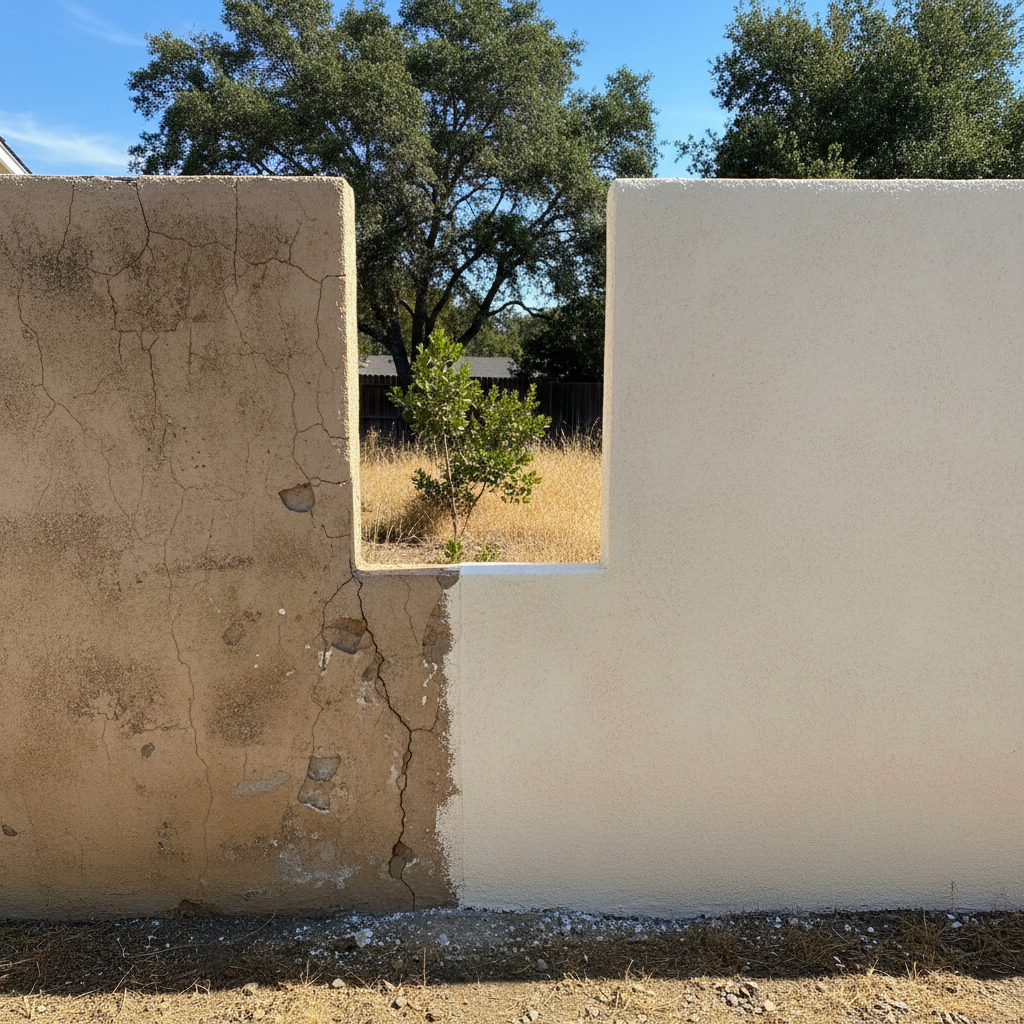
Alright, let's talk stucco. If you're looking to re-stucco your place or putting it on a new build here in Castro Valley, you're probably going to hear about two main types: traditional (sometimes called 'hard coat' or 'three-coat') and synthetic (EIFS, or Exterior Insulation and Finish Systems). Folks often ask me, "Which one's better?" The truth is, it's not always a simple answer. But for most homes around here, especially with our clay soils and the way houses settle, there's usually a clear winner.
Traditional Stucco: The Tried and True
This is what most people picture when they think of stucco. It's a mix of cement, sand, lime, and water, applied in layers over a wire lath. Typically, it's three coats: a scratch coat, a brown coat, and then the finish coat. This method has been around for centuries, and for good reason.
Durability & Longevity
Traditional stucco is tough. I mean, really tough. Once it cures, it forms a hard, rigid shell that can take a beating. It's impact-resistant and holds up incredibly well against the elements. We've got homes in Castro Valley, especially up in the hills, where the stucco's been on for 50, 60, even 70 years and still looks fantastic with proper maintenance. It's built to last, plain and simple.
Breathability
This is a big one, especially in our climate. Traditional stucco breathes. It allows moisture vapor to pass through it, which is crucial for preventing moisture buildup behind the walls. If water gets in (and it always finds a way, doesn't it?), traditional stucco lets it dry out. This is a huge advantage for avoiding rot, mold, and mildew issues.
Cost
Generally, traditional stucco can be a bit more expensive upfront than synthetic. That's mostly because it's more labor-intensive to apply those multiple coats. However, its longevity and lower risk of moisture problems can mean lower long-term costs.
Maintenance
It's pretty low maintenance. A good wash every few years to remove dirt and grime is usually all it needs. If it cracks (and all stucco eventually gets hairline cracks), they're usually easy to patch and blend.
Synthetic Stucco (EIFS): The Modern Option
EIFS is a multi-layered system that includes an insulation board, a base coat with a fiberglass mesh, and a finish coat. It's not cement-based in the same way traditional stucco is.
Durability & Longevity
EIFS is durable too, but it's more flexible than traditional stucco. This flexibility can be good for preventing some types of cracking. However, it's generally not as impact-resistant; a hard hit can dent or puncture it more easily. Its longevity depends heavily on perfect installation and diligent maintenance, particularly around penetrations like windows and doors.
Breathability & Moisture
Here's where EIFS can get tricky, especially if not installed perfectly. Older EIFS systems, particularly barrier EIFS, weren't breathable. If water got behind the system (say, through a faulty window seal), it would get trapped, leading to severe moisture damage, rot, and mold. Modern EIFS systems (drainable EIFS) have improved, incorporating drainage planes to allow water to escape. But even with these improvements, the risk of moisture issues is higher if installation isn't absolutely flawless.
Cost
EIFS can sometimes be a bit cheaper to install initially because it's often quicker to apply than the multiple layers of traditional stucco. It also offers excellent insulation value, which can save you money on energy bills.
Maintenance
EIFS requires more vigilant maintenance. Any cracks, holes, or damage need quick repair to prevent water intrusion. You really can't let it go, or you're asking for trouble. Inspections around windows and doors are critical.
My Recommendation for Castro Valley Homes
Look, for most homeowners here in Castro Valley, I'm going to lean towards traditional stucco every single time. Why? A few reasons:
- Our climate: We get our fair share of rain, and while it's not constant, when it comes, you want a wall system that can handle moisture and dry out. Traditional stucco does that naturally.
- Foundation movement: Many homes around here, especially those built on hillsides or our expansive clay soils, experience some degree of foundation movement over time. Traditional stucco's inherent rigidity, while it might show hairline cracks, is generally more forgiving in the long run than a system that absolutely cannot tolerate any moisture intrusion.
- Less worry: You just don't have to worry as much about hidden moisture problems with traditional stucco. It's a proven system that's stood the test of time.
- Repairability: If traditional stucco gets damaged, it's usually a straightforward repair. EIFS repairs, on the other hand, can be more complex to match and ensure proper drainage.
Now, if you're building a super energy-efficient home and EIFS is part of a carefully engineered, integrated system with a top-notch installer who specializes in drainable EIFS, it can be a good option. But for a typical re-stucco job or a standard new build, the benefits of traditional stucco far outweigh the potential risks and complexities of EIFS.
You want a wall system that's going to protect your home for decades without giving you headaches. That's what traditional stucco offers. When you're ready to talk about your project, give Castro Valley Stucco & Plastering a call. We've been doing this for a long time, and we'll make sure you get the right stucco for your home.